
Author

The California Policy Lab, a consortium run by the University of California system, recently released a report titled Priced Out: Relocation Amidst California’s Affordability Crisis. The motivation for the report has been the surge of outmigration from the state in recent years.
The researchers analyzed a unique dataset obtained from a credit rating agency to examine the characteristics of California households who have moved out of state over the last decade. Their key finding: movers come from a wide range of economic backgrounds but tend to be poorer than others in their neighborhoods. They relocate to nearby, lower-cost states—and are financially better off when they get there.
In other words, the report tells us what we already know, and that’s not a flaw. In a world full of false narratives, stating the obvious is often a necessary starting point to fixing problem. But what’s troubling is what the report doesn’t say—and that omission matters.
Official data from the California Department of Finance (DOF) estimates that, including international migration, the state lost almost 860,000 residents due to outmigration over the last decade (2016-2025). California has seen outflows of population in the past, but only during points of extreme economic decline. These recent losses have occurred while the state’s economy is growing and they reflect a sharp, long-term weakening of movement to California. This is a big problem, given its implication for the state’s tax base and loss of representation in Washington D.C.

According to the American Community Survey (ACS) from the U.S. Census (data that only includes domestic migration), 3.01 million Californians moved to other parts of the United States from 2020 to 2024, while only 1.74 million moved in—a net loss of 1.27 million people.
The California Policy Lab’s report focuses on these domestic movers and shows that those leaving are exactly who we would expect to leave: households under greater financial pressure than their neighbors. Think student debt, lower credit scores, and renters trying to buy their first home. These households are more sensitive to housing costs—and they leave for places where housing is cheaper.
So far, so good. But then the report just stops.
Its conclusion calls on policymakers to reduce the “cost of living” to stem outmigration. But it never explains how. And here, the mechanism really matters because there is only one mechanism that will actually work: building more housing. Remarkably, the report never makes that plea. Yes, it discusses high housing costs, but it does so along with groceries, utilities, and gasoline costs. The report seems to cast out-migration as strictly a function of the cost of living in the state.
Housing in California is indeed expensive. The median price of a newly purchased home hit $883,000 this February, compared to $458,000 nationally. The California Legislative Analyst’s Office estimates you’d need $220,000 in annual income to afford a mid-tier home. Median household income in the state is about $100,000. California rent prices tell the same story: about $2,400 per month, 40% above the national average. The U.S. Bureau of Economic Analysis’s price parity data estimates that California housing was 55% more expensive than national averages in 2024.
But housing is not like other costs, and to blend them all together obscures the real problem the state is facing in a way that will not help the policy choices made by California’s various legislative bodies.
To understand why, remember that housing prices, like all market prices, are an outcome, not an input. They are determined by the market clearing equilibrium between supply and demand, just like the graph that starts every Econ 101 class.
For all the complaints about home affordability in California, there is very little empty housing around. This is an equilibrated market. According to the 2024 ACS, the state’s overall vacancy rate is 7.3%, below the national average. Looking only at units available for rent or sale, that rate falls to just 2.2%—about 334,000 units. Data from the Housing Vacancy Survey and from private sources (MLS data and/or commercial data on apartments) show the same thing. Between 2019 and 2024 home listings in California fell by one-third.
The authors of the report focus on those who have chosen to move out of California, but we now have to ask the obvious question: if those people had stayed, where would they live?
At roughly 3 people per household, keeping the 3+ million who left the state from 2020 to 2024 would require 1 million additional housing units—that’s 3 times the number of units for sale or for rent in the state as of 2024. California currently expands its housing stock at about 125,000 units per year, so it would take 8 years of new construction to house just those who left during this 5-year period.
This is the point. When we fail to build enough housing to meet total demand, prices rise to discourage consumption (i.e. push people to move out of state) and restore market balance. That’s not a side effect—it’s the mechanism. California’s “affordability crisis” is, at its core, a supply crisis. Prices are high in order to restrict demand to the amount of housing that is available. And the only way to bring housing prices down is to create more of it.
This also explains why common affordability metrics, such as average housing costs as they relate to average household income, cloud our understanding of the issue. Home prices in California are 8 times the state’s median income while they are 6 times the median income in the nation overall—our housing is less affordable.
But this is an irrelevant comparison because the median household in California isn’t trying to buy a new home—they already have one because they bought (or rented) when asking prices and interest rates were lower. Housing remains affordable for them as long as they don’t move. The median cost-to-income ratio for mortgaged owners was 25.1% in 2024—well below the standard 30% threshold used to signify affordability. This hasn’t changed in 6 years and is lower than at any point between 2006 (when the ACS began) and 2017.
Similarly, California’s rent-to-income ratio in 2024 (the most recent ACS data available) is the lowest is has been in 15 years. And while these ratios are higher in California than in other places, the gap is small and steady over time. Californians seem willing to spend more on housing to live here.


The ‘affordability’ problem is faced by those who want to own or rent a home in the state. Current housing prices are set not by the median household, but by the marginal buyer—the last buyer able to secure a home given limited supply. When supply is scarce, that marginal buyer is relatively wealthier, and prices rise accordingly. When supply is plentiful the marginal buyer has a lower income and sales prices are also lower.
And that’s exactly what we’re seeing happen. Even recent buyers have cost burdens that are only modestly above historical norms. In 2024, according to the ACS data, recent buyers (those who have lived in their homes for 2 years or less) had a median cost-to-income ratio of just 30.8%, compared to 26.9% in 2019, despite median home prices rising 50% and mortgage rates increasing from 3% to 6.7%.
This reflects a dramatic increase in income for that marginal buyer, partly driven by a growing economy and partly driven by the decline in housing supply. Contrast that to the subprime lending and speculative fever gripping homebuyers in 2006 when the share of cost burdened homeowners was over 50% (see table below), a level far exceeding sustainable limits.

The reason housing in California is only “affordable” for those who already live here and for the few who are moving here is, by definition, because there isn’t enough of it to go around. If the housing supply in the state was more affordable, demand would outstrip it and create a true housing shortage.
And, as mentioned, treating housing affordability as a general cost-of-living problem is simply wrong. Cut gas prices in half? Demand to live in California will increase, making housing more expensive. Lower state taxes? Housing gets more expensive. These other costs affect demand for housing, but with a nearly fixed supply of homes, any increase in demand simply gets capitalized into higher prices. Without more supply, everything else just shifts housing demand – and housing prices – around.
This is why policies such as minimum wage hikes, housing subsidies, and rent control miss the mark. They simply increase demand for housing, which then forces higher costs on the very people who receive support from such policies. They do nothing to solve the underlying housing supply constraint—and can even make it worse.
The California Policy Lab report doesn’t touch on some central truths and ultimately misleads with its final conclusion that the outflow of population suggests “policymakers should focus on restoring California’s appeal to both current residents and to potential newcomers.”
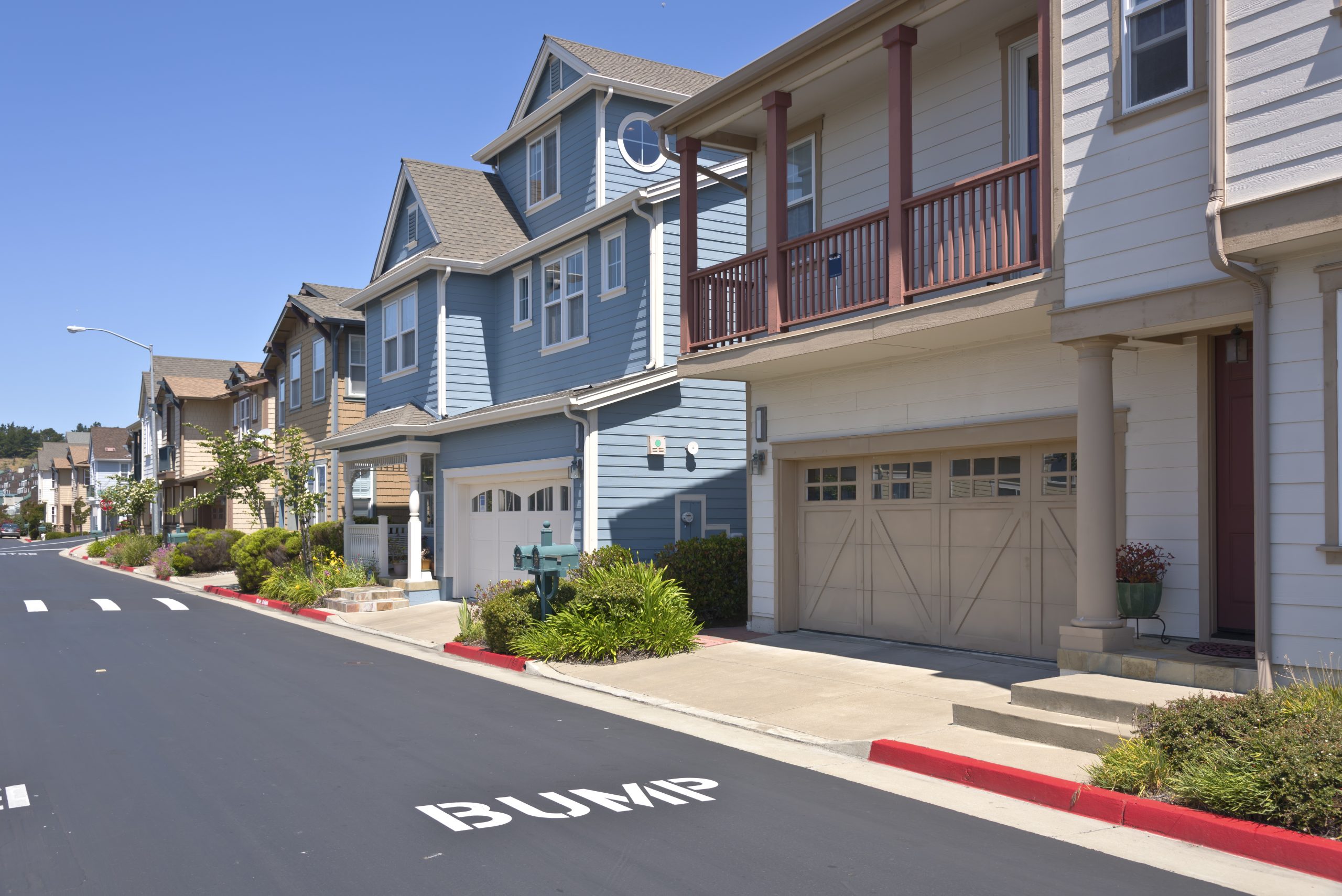
California doesn’t suffer from too little appeal—it suffers from too much. People want to live here, but we don’t build enough housing for them. If we want more people to stay—and more to come—we need to build more housing. Full stop. Build, baby, build.
That supply side issues are omitted from the report is a real problem. It reflects a growing tendency to treat affordability as a distributional issue rather than what it fundamentally is: a supply problem. And that turns an otherwise solid report into a dangerously misleading one. It allows lawmakers to pretend they’re fixing the issue by focusing on affordability rather than supply. But that, inevitably, fails to solve anything while creating a myriad of new problems.
If we want to fix this dilemma, we have to start by fixing the narrative. This report, while interesting and sound in many ways, sets us back on that front.