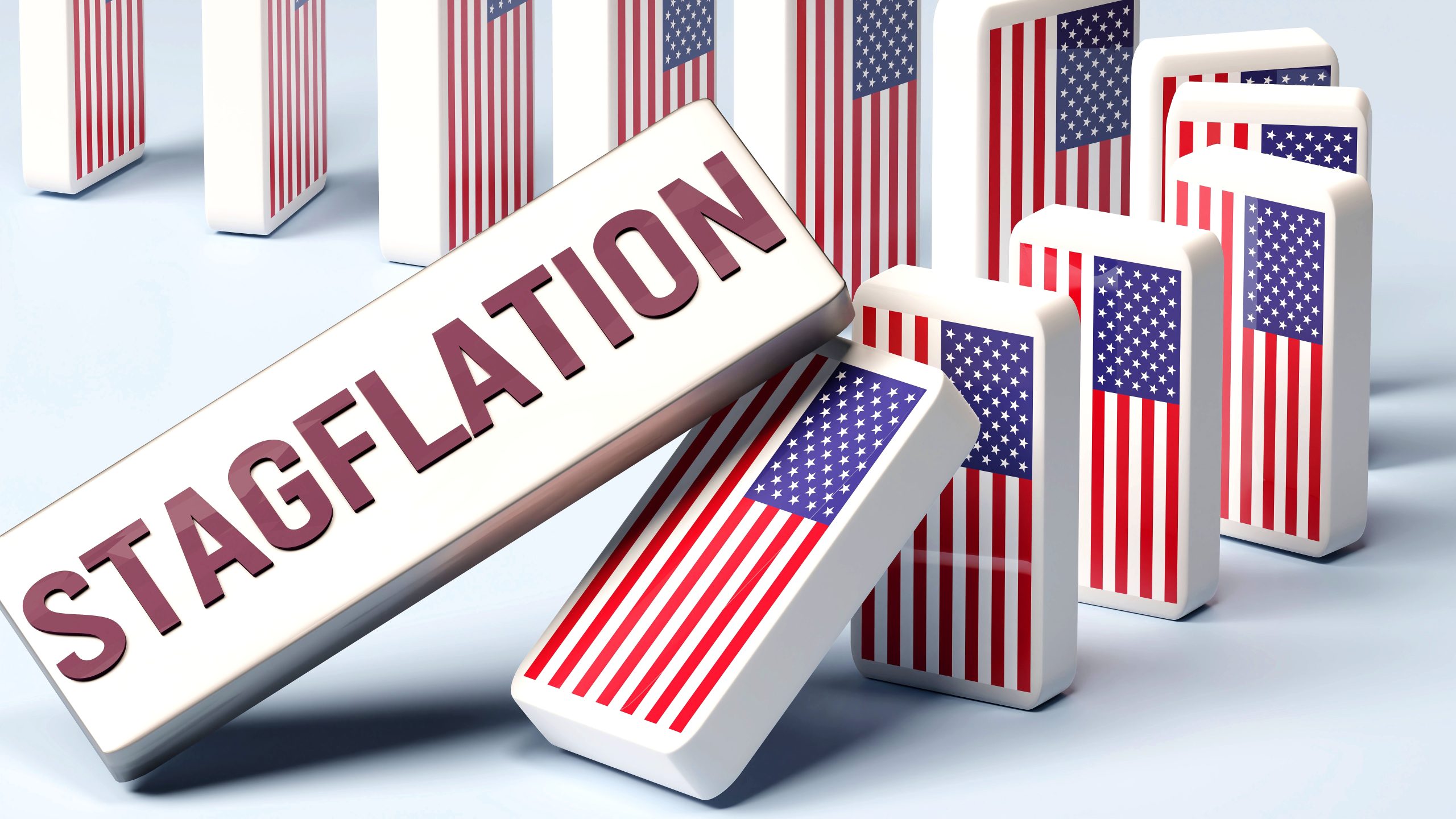
There is certainly a danger of stagflation in America’s future. But understanding why that threat is now rising means correcting misunderstandings about the past.
Real economic growth in the United States slowed sharply during that decade, falling from 4.5% per year between 1960 and 1969 to an average of 3.2% between 1970 and 1979. This deceleration was driven by a combination of factors including slower population growth as the baby boom faded, and the early stages of deindustrialization, which contributed to weaker labor productivity growth. Even so, 3.2% is hardly a poor performance. In fact, it is substantially faster than growth has been in the 21st century, which has averaged only 2.2%.
The slowdown, by itself, did not cause inflation. Slower growth is not inherently linked to rising prices. What happened back then was that slower growth put pressure on the federal budget at a time when Washington was already increasing spending due to the Vietnam War and new entitlement programs. In an era when there was still considerable resistance to large expansions in federal borrowing—the nation’s debt as a share of GDP actually fell through much of the 1970s—the burden of sustaining economic growth shifted to the Federal Reserve.
Expanding the money supply can be an effective short-run response when an economy is pushed below potential by a temporary negative shock. But the changes of the 1970s were not temporary. They reflected a lasting slowdown in the growth of the U.S. economy’s productive capacity. Under those conditions, easier money may provide a brief boost to output, but it quickly spills over into inflation. In that sense, the stagflation of the 1970s was not the result of some mysterious external condition. It was the product of poor monetary policy in the face of fundamental structural change.
Today, the United States again faces the possibility of stagflation, but the underlying structural problem is different. The danger is not being driven by a slowdown in productivity growth, but by the federal government’s unsustainable fiscal position.
The nation’s current fiscal year deficit is on track to exceed $2 trillion, driven by weaker tariff revenues and rising military expenditures tied to conflict in the Middle East. The scale of that deficit is difficult to overstate. It amounts to roughly one-third of total federal spending and represents the equivalent of a $16,000-per-U.S.-household subsidy—nearly 10% of disposable personal income. The official U.S. household saving rate stands at 4.5%, but once public borrowing is taken into account, the true figure is closer to negative 5%.
Even more troubling is the national debt, which has now surpassed $39 trillion. At the current blended interest rate of 3.2%, that debt is costing the federal government roughly $1.3 trillion annually in interest alone. And because that blended rate remains below the current federal funds rate, interest costs will continue rising even if policy rates remain stable. That will place even greater strain on the budget. The situation is becoming increasingly precarious, and it would take only a modest shock to rattle bond markets, push rates upward, and send the United States into a full-fledged fiscal crisis.
Any serious effort to close the budget gap would be both economically and politically painful. Spending cuts and tax increases would slow growth and could easily tip the economy into recession. But the political pain may be even more important, because it would create overwhelming pressure for the federal government to seek relief from an increasingly compliant Federal Reserve.
That relief would likely come in the form of quantitative easing (creating new money).
In 2008, Fed Chairman Ben Bernanke first deployed QE to stabilize the financial system during the collapse that followed the subprime mortgage bubble. But the potential for abuse became clear with Chairman Jerome Powell’s excessive QE use in responding to the pandemic. The result was a roughly 40% increase in the money supply and, soon after, a sharp burst of inflation. Still, Chairmans’ Bernanke, Janet Yellen, and Powell have all continued to argue that QE had little or nothing to do with that inflation.
The claim is more than mistaken; it’s dangerous. By insisting that QE does not fuel inflation, policymakers have laid the intellectual groundwork for a future Fed Chair to use it once again—this time not to stabilize financial markets, but to help the federal government finance an unsustainable fiscal position. Another round of QE deployed in that kind of environment would do exactly what monetary excess always does: ignite inflation.
Put it all together, and the result would look very much like another era of stagflation.